Coptic Museum
The museum gives essential context before or after the churches: manuscripts, textiles, icons, carved woodwork, frescoes, and objects that show how Coptic art developed in Egypt.
 Mersavia
Old Cairo heritage guide
A compact, layered corner of Old Cairo where church interiors, the Coptic Museum, Jewish heritage context, Roman fort traces, and everyday lanes sit close enough to understand on foot.

Why visit
Coptic Cairo is one of Cairo's most rewarding slow visits because the main stops are close together but not emotionally or historically simple. You are moving through active religious spaces, museum rooms, Jewish heritage context, and the older Fustat layer of the city.
Use the area as a focused heritage walk rather than a box to tick between museums. The best visit leaves time for quiet interiors, museum labels, uneven walking surfaces, and the possibility that a church or room is unavailable when you arrive.
What you can see
These are the natural planning anchors for Coptic Cairo. Access and sequence still depend on the day, services, museum operation, security, restoration work, and the traveler's pace.
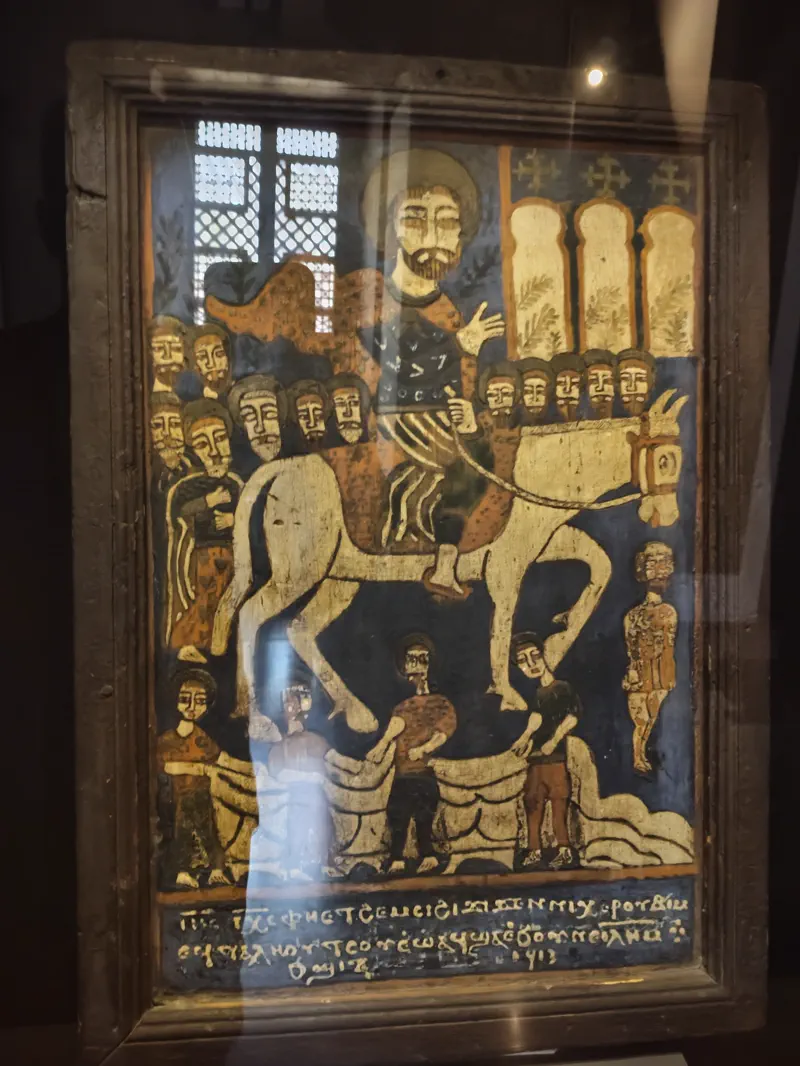
The museum gives essential context before or after the churches: manuscripts, textiles, icons, carved woodwork, frescoes, and objects that show how Coptic art developed in Egypt.
The Ministry of Tourism and Antiquities describes the church as built over ruins of Old Cairo's Roman fort and near the Coptic Museum. Visit respectfully if it is open.
Also known as the Church of Saints Sergius and Bacchus, this is a major Coptic Cairo stop. Its dating is debated, so avoid treating every tradition as archaeological certainty.
A nearby Jewish heritage site that broadens the Old Cairo story. Treat current access as a check-first item rather than assuming it follows church or museum rules.
Saint Barbara, Saint George / Mar Girgis area churches, courtyards, and narrow approaches may shape the walk, but each site has its own authority and access conditions.
The metro area can be useful for light, step-tolerant travelers. Drivers and taxis still work better for families, heat-sensitive visitors, or anyone combining multiple Cairo clusters.
Visual story
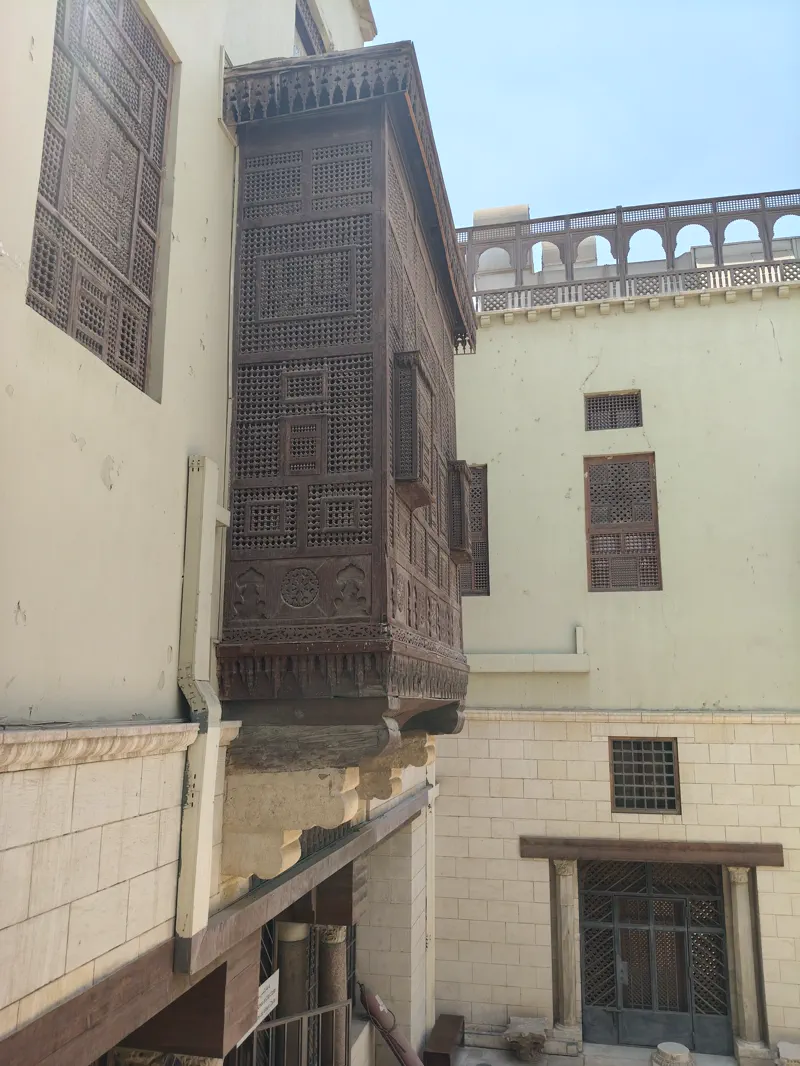
The strongest photographs are not a generic gallery. They show the rhythm travelers actually notice: wood screens, filtered light, manuscripts, icons, and sudden quiet after the streets.
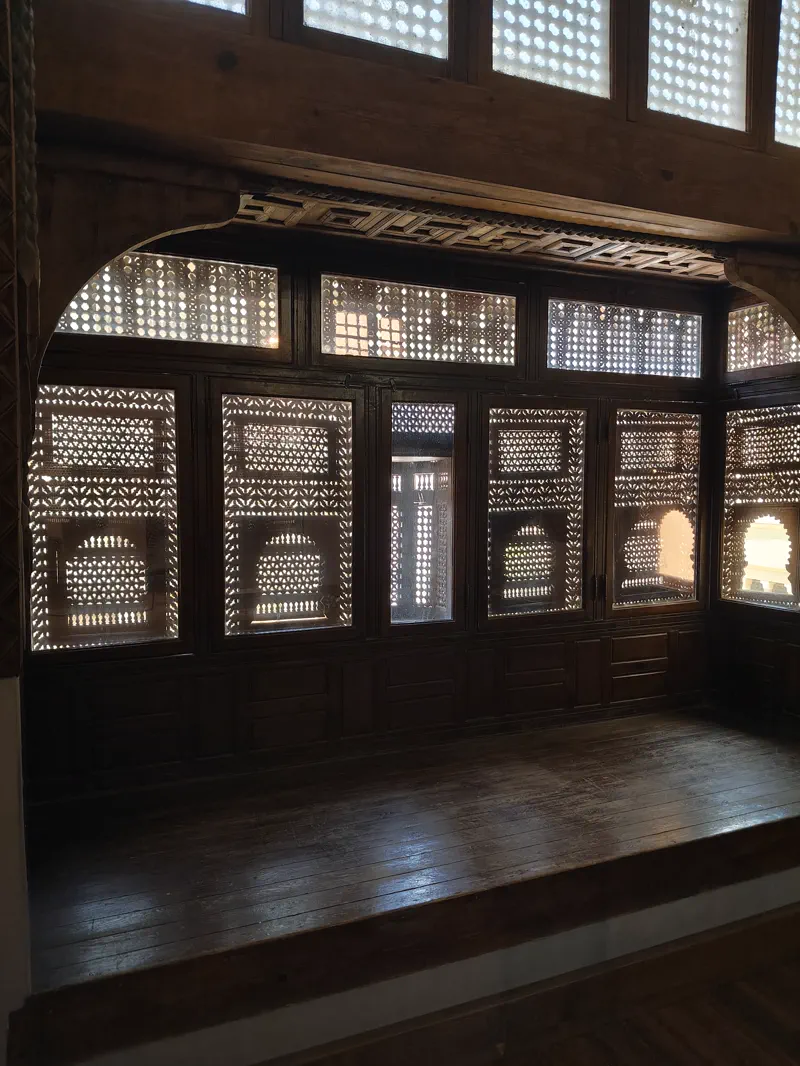
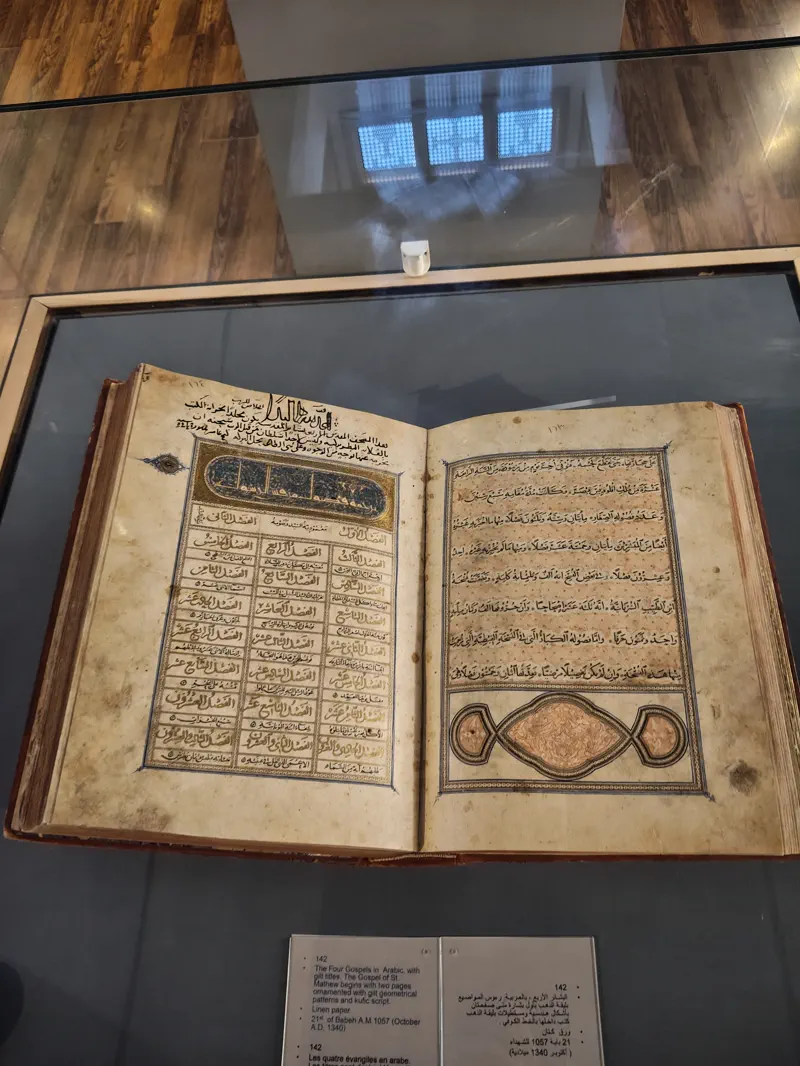
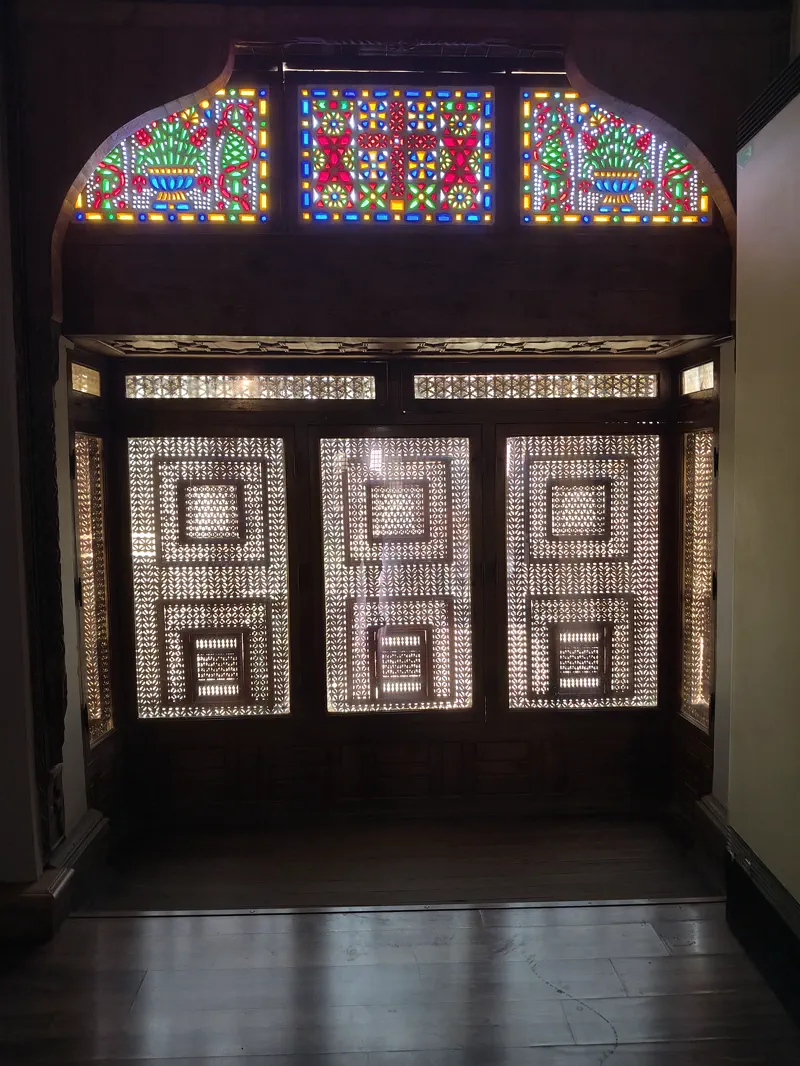
Photo details
These selected details stay deliberately neutral where the exact object or site identity is not proven from the photograph alone.
Walking route
Actual conditions can change. Confirm current museum tickets, site access, services, closures, and photography rules close to your visit.
How long to spend
One church if open, the lane context, and a short look at the area. Skip the museum unless you are comfortable moving quickly.
Coptic Museum plus two or three nearby heritage stops, with time for services, security, shade, and a calm exit.
Museum-first interpretation, selected churches, Ben Ezra context if open, and a guide if religious or art-historical detail matters.
Coptic Museum
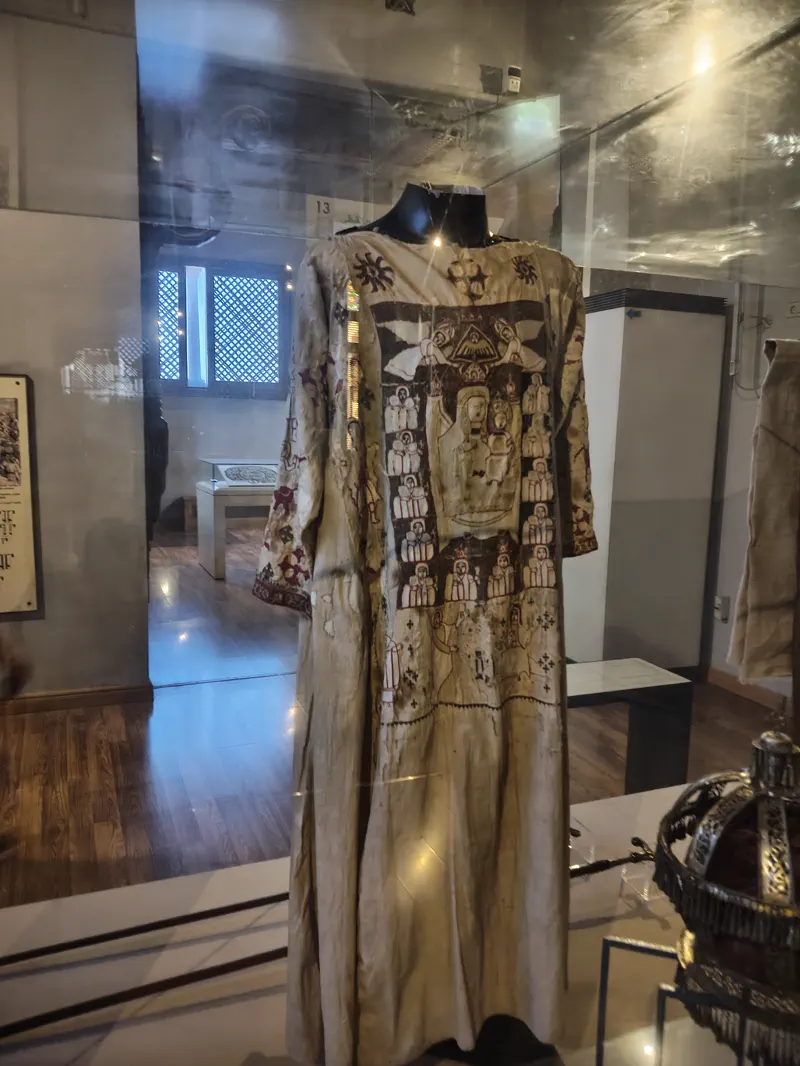
The Coptic Museum is not just an add-on. It explains the artistic and religious world around the churches: manuscripts, textiles, woodwork, icons, fresco fragments, and the way Coptic art absorbed and reworked Pharaonic, Greek, Roman, Byzantine, and later influences.
Check the official museum page and ticket portal close to travel. Opening hours, last ticket time, ticket prices, galleries, and photography conditions are operational details, not permanent promises.
Check the official Coptic Museum pageEtiquette and photography
Practical visit information
Mar Girgis metro can be convenient for some visitors. A driver or taxi is usually easier for families, limited mobility, hot weather, or combining Coptic Cairo with NMEC, Citadel, or Al-Muizz.
Expect short distances but uneven surfaces, thresholds, steps, security points, narrow approaches, crowds, and limited shade at times.
Do not assume a step-free route through every church, museum area, restroom, or pickup point. Confirm directly if ramps, lifts, seating, toilets, or wheelchair access are essential.
Use one Old Cairo cluster, add a rest break, then decide whether NMEC or another Cairo area still fits. Avoid adding Giza, Citadel, Al-Muizz, and Coptic Cairo into one serious day.
Nearby and combine with
Mersavia help
Mersavia can help turn this guide into a practical request: pickup area, guide usefulness, museum-first or church-first sequence, family pace, access questions, and whether to combine NMEC. A submitted request is not a booking, ticket purchase, price guarantee, or provider availability promise.
Sources